

Learning How to Feel Safe Again After Chronic Stress
Trauma & Healing | Solace Grove Behavioral Health
Chronic stress can affect more than daily mood or energy levels. Over time, prolonged emotional pressure, trauma, anxiety, burnout, or constantly feeling “on edge” may begin affecting how safe, calm, and emotionally regulated individuals feel in everyday life.
Many people become so used to functioning in survival mode that rest, stillness, or emotional vulnerability may begin to feel unfamiliar or even uncomfortable.
At Solace Grove Behavioral Health, we believe healing involves more than simply reducing stress — it also involves helping individuals reconnect with emotional safety, balance, and supportive spaces where the nervous system can begin to recover.
Chronic Stress Can Keep the Nervous System in Survival Mode
When stress remains constant for long periods of time, the nervous system may stay in a heightened state of alertness. Some individuals may begin feeling:
emotionally reactive
constantly overwhelmed
unable to relax fully
mentally exhausted
emotionally disconnected
hypervigilant or always “on guard”
anxious even during calm moments
physically tense or restless
These responses are not signs of weakness. Often, they are protective patterns developed while navigating prolonged stress or difficult experiences.
If overstimulation and chronic stress have also been affecting emotional wellness, you may find support in our article on How Overstimulation Affects Your Nervous System and Mental Health.
Emotional Safety Matters in Healing
Healing often happens more gradually when individuals feel emotionally safe, supported, and respected throughout the process.
Supportive environments may help individuals:
feel less emotionally overwhelmed
reconnect with rest and calm
improve emotional regulation
strengthen trust and connection
reduce feelings of isolation
process emotions more safely
Healing is not about forcing yourself to “move on” quickly. It is about creating space for restoration, emotional balance, and healthier coping patterns over time.
Small Steps Toward Feeling Grounded Again
Learning to feel emotionally safe again may begin with small, supportive practices practiced consistently over time.
Helpful supportive habits may include:
spending time in calming environments
reducing overstimulation
creating healthier routines and boundaries
practicing mindfulness or grounding exercises
connecting with supportive people
prioritizing rest and emotional recovery
engaging in therapy or behavioral health support
Small moments of emotional safety and calm can gradually help the nervous system feel more balanced and supported.
Therapy Can Support Emotional Healing
Therapy can provide supportive space for individuals to process chronic stress, trauma, emotional overwhelm, and nervous system exhaustion without judgment.
Behavioral health support may help individuals:
strengthen coping strategies
improve emotional awareness
process difficult experiences safely
reconnect with emotional balance
reduce feelings of overwhelm
rebuild trust in themselves and others
Healing often becomes more manageable when individuals no longer feel like they have to navigate emotional stress alone.
Compassionate Trauma and Stress Support in Milwaukee
At Solace Grove Behavioral Health, we provide compassionate behavioral health and emotional wellness services focused on healing, stress management, trauma-informed care, and long-term well-being.
We serve individuals throughout Milwaukee and across Wisconsin through supportive in-person and telehealth services designed to create emotionally safe spaces for healing and restoration.
You deserve spaces where your mind and body can begin to feel safe, supported, and at peace again.
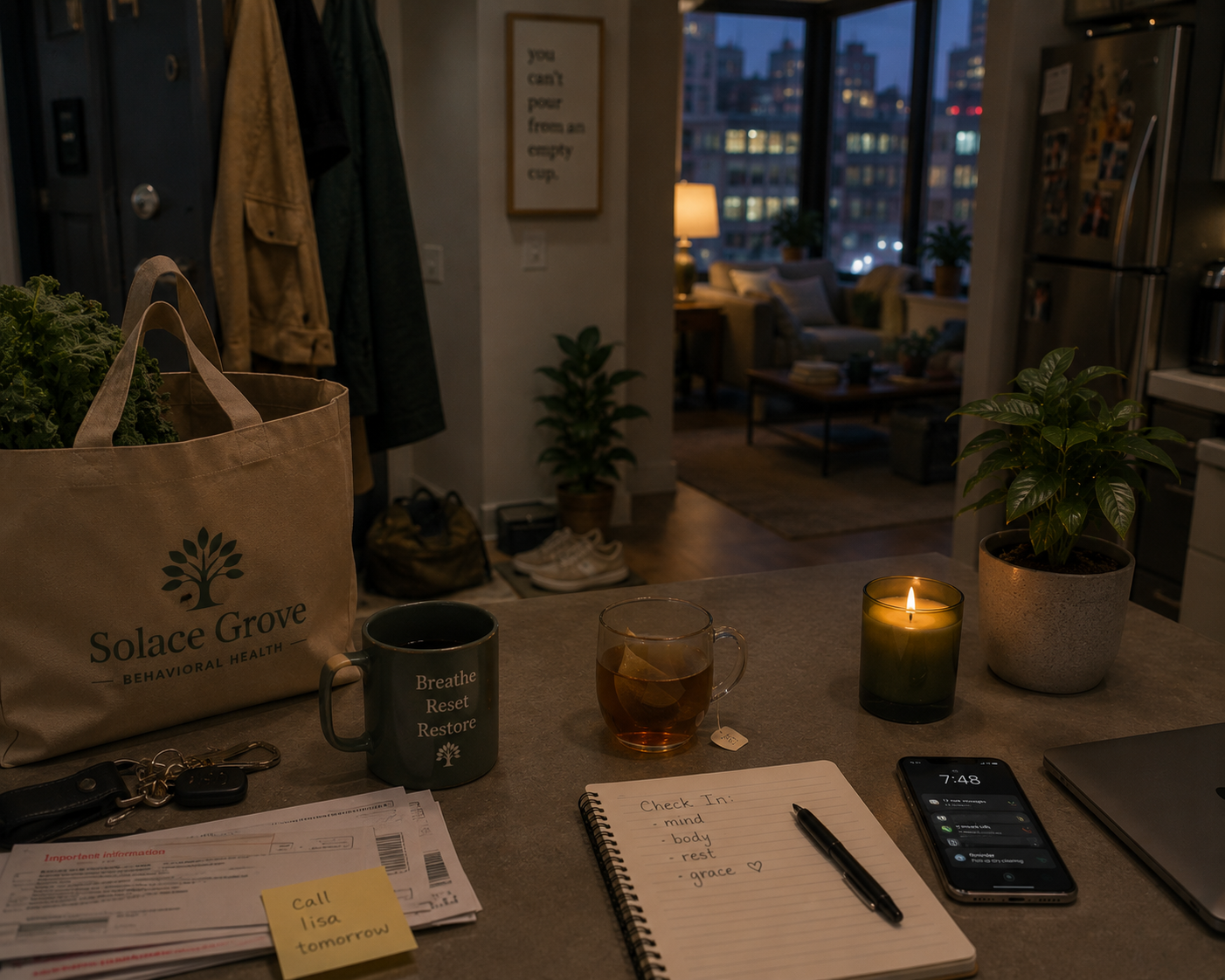
How Chronic Stress Can Affect Emotional and Physical Wellness
Chronic stress can affect both emotional and physical wellness in ways that often go unnoticed over time. This article explores how ongoing stress may impact emotional balance, energy, sleep, relationships, and overall well-being while offering supportive strategies for stress management and emotional wellness.
Anxiety & Stress | Solace Grove Behavioral Health
Stress is a normal part of life, but when stress becomes constant or overwhelming, it can begin affecting both emotional and physical wellness in significant ways. Many individuals continue managing work, caregiving responsibilities, financial pressure, relationships, and everyday demands without realizing how deeply chronic stress may be impacting their overall well-being.
At Solace Grove Behavioral Health, we believe emotional wellness and physical wellness are deeply connected — and both deserve care and attention.
Chronic Stress Can Affect More Than Emotions
While stress often begins emotionally, it can also affect the body over time. When the nervous system remains in a prolonged state of tension or overwhelm, individuals may begin experiencing emotional, mental, and physical symptoms simultaneously.
Chronic stress may contribute to:
emotional exhaustion
anxiety or constant worry
irritability or frustration
fatigue or low energy
difficulty sleeping
headaches or muscle tension
trouble concentrating
emotional numbness
feeling constantly “on edge”
burnout from daily responsibilities
Many people continue functioning while quietly carrying significant emotional and physical stress.
The Nervous System and Emotional Wellness
The nervous system plays an important role in how individuals respond to stress and emotional experiences. Long-term stress may make it difficult for the body and mind to fully relax, rest, and recover.
Constant emotional pressure can sometimes leave individuals feeling:
mentally overwhelmed
emotionally reactive
physically tense
disconnected from rest
unable to slow down
Over time, chronic stress can affect emotional balance, relationships, focus, motivation, and overall quality of life.
Small Steps Can Support Stress Management
Managing stress does not always require dramatic life changes. Often, small intentional habits practiced consistently over time can support emotional and physical wellness.
Helpful supportive practices may include:
prioritizing rest and sleep
creating healthier boundaries
practicing mindfulness or grounding exercises
reducing overstimulation
spending time outdoors
taking intentional breaks
connecting with supportive people
seeking therapy or emotional support
Even small moments of calm and restoration can positively affect overall well-being.
Emotional Support Matters
Many individuals minimize stress because they feel pressure to keep pushing forward. However, emotional wellness deserves attention and support.
Therapy and behavioral health support can help individuals:
process emotional stress safely
strengthen coping strategies
improve emotional awareness
reduce feelings of overwhelm
create healthier routines and balance
reconnect with emotional wellness and hope
Seeking support is not weakness — it is an important step toward caring for yourself holistically.
Compassionate Stress Support in Milwaukee
At Solace Grove Behavioral Health, we provide compassionate behavioral health and emotional wellness services focused on healing, stress management, and long-term well-being.
We serve individuals throughout Milwaukee and across Wisconsin through supportive in-person and telehealth services designed to create emotionally safe spaces for healing and growth.
Your emotional and physical wellness both deserve care, support, and restoration.
