

How Anxiety Can Affect Sleep and Daily Life
Anxiety & Stress | Solace Grove Behavioral Health
Anxiety can affect more than emotions alone. Ongoing worry, stress, emotional overwhelm, and racing thoughts may also begin affecting sleep, concentration, routines, relationships, and overall quality of life in ways that gradually become difficult to manage.
Many individuals experiencing anxiety continue functioning outwardly while privately struggling with mental exhaustion, difficulty relaxing, or feeling constantly “on edge.”
At Solace Grove Behavioral Health, we believe emotional wellness deserves compassionate support, emotionally safe spaces, and healthy coping tools that help individuals feel more balanced over time.
Anxiety and Sleep Are Closely Connected
Stress and anxiety can make it difficult for the nervous system to fully relax and recover. Some individuals may struggle with:
difficulty falling asleep
racing thoughts at night
waking frequently during sleep
feeling mentally exhausted but unable to rest
restless sleep
waking up feeling emotionally drained
Over time, lack of restorative sleep may also increase feelings of stress, irritability, emotional overwhelm, and difficulty concentrating throughout the day.
If chronic stress and emotional exhaustion have also been affecting your well-being, you may find support in our article on How Chronic Stress Can Affect Emotional and Physical Wellness.
Anxiety Can Affect Everyday Life in Subtle Ways
Anxiety does not always appear as panic or visible distress. For many individuals, it may quietly affect:
focus and concentration
emotional regulation
work performance
relationships
decision-making
physical tension
motivation and energy
ability to relax
Some individuals may become so accustomed to operating under stress that anxiety begins to feel “normal,” even when emotional wellness is being affected significantly.
Emotional Wellness Requires Rest and Recovery
Mental wellness involves more than simply continuing to push through stress. Emotional well-being also requires opportunities for rest, restoration, and emotional support.
Helpful supportive practices may include:
creating healthier sleep routines
limiting overstimulation before bed
practicing grounding or mindfulness exercises
reducing constant stress exposure
creating healthier boundaries
spending time in calming environments
engaging in therapy or emotional support
Small moments of calm and emotional restoration can help support healthier nervous system balance over time.
Therapy Can Help Individuals Manage Anxiety
Therapy can provide supportive space for individuals to better understand anxiety patterns, emotional triggers, and stress responses while developing healthier coping strategies.
Behavioral health support may help individuals:
strengthen emotional awareness
reduce feelings of overwhelm
improve stress management
create healthier routines
improve emotional balance
strengthen coping tools for anxiety and stress
You may also benefit from reading Therapy for Anxiety in Milwaukee: Support for Stress, Worry, and Emotional Overwhelm to learn more about how supportive care can help individuals navigate anxiety and emotional wellness challenges.
Compassionate Anxiety Support in Milwaukee
At Solace Grove Behavioral Health, we provide compassionate behavioral health and emotional wellness services designed to support healing, anxiety management, stress reduction, and long-term well-being.
We serve individuals throughout Milwaukee and across Wisconsin through supportive in-person and telehealth services focused on emotional safety, dignity, and holistic care.
You do not have to navigate anxiety, sleep difficulties, or emotional overwhelm alone — support is available.

Therapy for Anxiety in Milwaukee: Support for Stress, Worry, and Emotional Overwhelm
Anxiety can affect emotional wellness, relationships, sleep, focus, and overall well-being in ways that are often difficult to manage alone. This article explores how therapy for anxiety in Milwaukee can help individuals navigate stress, worry, emotional overwhelm, and chronic anxiety with compassionate behavioral health support.
Anxiety & Stress | Solace Grove Behavioral Health
Anxiety can affect emotional wellness in ways that often go unnoticed by others. While occasional stress is a normal part of life, ongoing worry, emotional overwhelm, racing thoughts, or constant tension can begin affecting daily routines, relationships, focus, sleep, and overall well-being.
At Solace Grove Behavioral Health, we believe anxiety deserves compassionate support, emotionally safe spaces, and healthy coping tools that help individuals feel more balanced and supported over time.
Anxiety Can Look Different for Everyone
Some individuals experience anxiety openly, while others continue managing responsibilities outwardly while silently carrying emotional stress internally.
Anxiety may appear as:
constant overthinking
difficulty relaxing
feeling emotionally overwhelmed
irritability or frustration
racing thoughts
trouble sleeping
feeling constantly “on edge”
difficulty concentrating
physical tension or restlessness
avoiding stressful situations
Many individuals experiencing anxiety continue functioning daily while quietly struggling emotionally.
Chronic stress and emotional pressure may also affect overall emotional well-being over time. You may also find support in our article on Mental Wellness in Milwaukee: Why Emotional Health Matters Every Day.
Therapy Can Help Support Emotional Wellness
Therapy for anxiety can provide individuals with supportive tools and emotionally safe spaces to better understand stress patterns, emotional triggers, and coping strategies.
Behavioral health support may help individuals:
strengthen emotional awareness
manage stress and overwhelm
reduce feelings of anxiety
improve emotional regulation
create healthier routines and boundaries
strengthen coping strategies
reconnect with emotional balance
Seeking support is not weakness — it is a meaningful step toward caring for your mental wellness.
Anxiety and Burnout Often Overlap
Long-term stress, emotional pressure, caregiving responsibilities, work demands, trauma, and overstimulation can all contribute to feelings of anxiety and emotional exhaustion.
Over time, individuals may begin feeling mentally drained, emotionally reactive, or disconnected from rest and balance. If emotional exhaustion has become overwhelming, you may also benefit from reading Signs You May Be Emotionally Burned Out.
Healing often begins by recognizing that emotional wellness deserves attention and support.
Small Steps Toward Healing Matter
Managing anxiety does not always require major life changes overnight. Small supportive habits practiced consistently over time can help improve emotional balance and reduce feelings of overwhelm.
Helpful practices may include:
mindfulness or grounding exercises
healthy sleep routines
reducing overstimulation
spending time in calming environments
creating healthier boundaries
connecting with supportive people
therapy and behavioral health support
Even small moments of emotional care can have a meaningful impact over time.
Compassionate Anxiety Therapy in Milwaukee
At Solace Grove Behavioral Health, we provide compassionate behavioral health and therapy services focused on emotional wellness, anxiety support, healing, and long-term well-being.
We serve individuals throughout Milwaukee and across Wisconsin through supportive in-person and telehealth services designed to create emotionally safe spaces for healing and growth.
You do not have to navigate anxiety, stress, or emotional overwhelm alone — support is available.
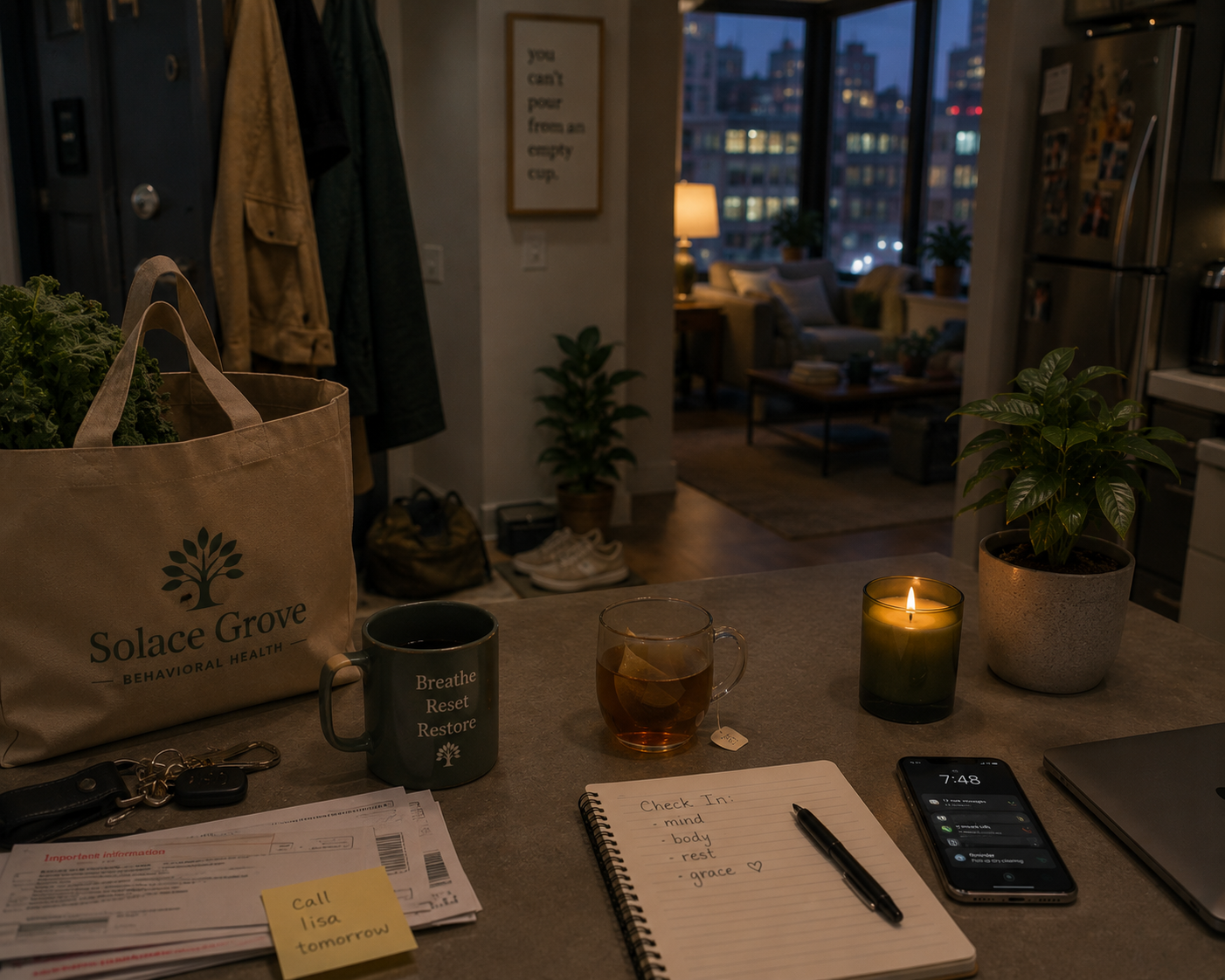
How Chronic Stress Can Affect Emotional and Physical Wellness
Chronic stress can affect both emotional and physical wellness in ways that often go unnoticed over time. This article explores how ongoing stress may impact emotional balance, energy, sleep, relationships, and overall well-being while offering supportive strategies for stress management and emotional wellness.
Anxiety & Stress | Solace Grove Behavioral Health
Stress is a normal part of life, but when stress becomes constant or overwhelming, it can begin affecting both emotional and physical wellness in significant ways. Many individuals continue managing work, caregiving responsibilities, financial pressure, relationships, and everyday demands without realizing how deeply chronic stress may be impacting their overall well-being.
At Solace Grove Behavioral Health, we believe emotional wellness and physical wellness are deeply connected — and both deserve care and attention.
Chronic Stress Can Affect More Than Emotions
While stress often begins emotionally, it can also affect the body over time. When the nervous system remains in a prolonged state of tension or overwhelm, individuals may begin experiencing emotional, mental, and physical symptoms simultaneously.
Chronic stress may contribute to:
emotional exhaustion
anxiety or constant worry
irritability or frustration
fatigue or low energy
difficulty sleeping
headaches or muscle tension
trouble concentrating
emotional numbness
feeling constantly “on edge”
burnout from daily responsibilities
Many people continue functioning while quietly carrying significant emotional and physical stress.
The Nervous System and Emotional Wellness
The nervous system plays an important role in how individuals respond to stress and emotional experiences. Long-term stress may make it difficult for the body and mind to fully relax, rest, and recover.
Constant emotional pressure can sometimes leave individuals feeling:
mentally overwhelmed
emotionally reactive
physically tense
disconnected from rest
unable to slow down
Over time, chronic stress can affect emotional balance, relationships, focus, motivation, and overall quality of life.
Small Steps Can Support Stress Management
Managing stress does not always require dramatic life changes. Often, small intentional habits practiced consistently over time can support emotional and physical wellness.
Helpful supportive practices may include:
prioritizing rest and sleep
creating healthier boundaries
practicing mindfulness or grounding exercises
reducing overstimulation
spending time outdoors
taking intentional breaks
connecting with supportive people
seeking therapy or emotional support
Even small moments of calm and restoration can positively affect overall well-being.
Emotional Support Matters
Many individuals minimize stress because they feel pressure to keep pushing forward. However, emotional wellness deserves attention and support.
Therapy and behavioral health support can help individuals:
process emotional stress safely
strengthen coping strategies
improve emotional awareness
reduce feelings of overwhelm
create healthier routines and balance
reconnect with emotional wellness and hope
Seeking support is not weakness — it is an important step toward caring for yourself holistically.
Compassionate Stress Support in Milwaukee
At Solace Grove Behavioral Health, we provide compassionate behavioral health and emotional wellness services focused on healing, stress management, and long-term well-being.
We serve individuals throughout Milwaukee and across Wisconsin through supportive in-person and telehealth services designed to create emotionally safe spaces for healing and growth.
Your emotional and physical wellness both deserve care, support, and restoration.

High-Functioning Anxiety: Signs You Might Be Struggling Without Knowing It
High-functioning anxiety can cause individuals to appear successful, productive, and “put together” outwardly while quietly struggling with stress, overthinking, emotional exhaustion, and constant pressure internally. This article explores common signs of high-functioning anxiety and how emotional support can help individuals create healthier balance and coping strategies.
Anxiety & Stress | Solace Grove Behavioral Health
From the outside, people with high-functioning anxiety often appear to have everything together. They meet deadlines, show up for others, maintain responsibilities, and keep moving — even when internally they are exhausted, overwhelmed, and quietly struggling.
High-functioning anxiety is not a formal clinical diagnosis, but it is a very real experience that affects many individuals who never recognize it as anxiety at all.
At Solace Grove Behavioral Health, we want to help individuals throughout Milwaukee and across Wisconsin understand what high-functioning anxiety looks like — and know that support is available.
What Is High-Functioning Anxiety?
High-functioning anxiety describes a pattern in which a person experiences significant anxiety internally while continuing to perform well or appear capable externally. The anxiety does not prevent them from functioning — in fact, it often drives them to overfunction.
For many people, the constant pressure to stay productive, avoid mistakes, and keep up appearances becomes so familiar that they stop recognizing it as anxiety. It simply feels like who they are.
Signs You May Be Experiencing High-Functioning Anxiety
Because high-functioning anxiety does not always look like the stereotypical image of an anxious person, it often goes unrecognized for years.
Common signs include:
Constant overthinking or inability to quiet your mind
Preparing excessively for worst-case scenarios
Difficulty delegating or trusting others to do things correctly
Saying yes to things out of fear of disappointing others
Using busyness to avoid sitting with uncomfortable feelings
Feeling like you are always waiting for something to go wrong
Perfectionism that is driven by fear rather than genuine desire
Difficulty relaxing even when there is nothing urgent to do
Physical symptoms like tension headaches, tight shoulders, or an unsettled stomach
Replaying conversations or situations long after they have passed
Feeling secretly exhausted despite appearing fine to everyone around you
If several of these feel familiar, you are not alone — and what you are experiencing deserves attention and support.
The Hidden Cost of High-Functioning Anxiety
Because high-functioning anxiety often produces outward results — good performance, reliability, achievement — it can be easy to dismiss or minimize. Many people tell themselves they do not have a real problem because they are still functioning.
But the internal cost is significant. Over time, high-functioning anxiety can contribute to:
Burnout and emotional exhaustion
Strained relationships due to perfectionism or control
Difficulty experiencing genuine joy or relaxation
Physical health symptoms from chronic stress
Depression developing alongside ongoing anxiety
A growing disconnect between how you appear and how you actually feel
Functioning well on the outside does not mean everything is okay on the inside. Your internal experience matters — and it deserves care.
Why High-Functioning Anxiety Often Goes Untreated
Many individuals with high-functioning anxiety delay seeking help because they feel they do not deserve support, or because their anxiety appears to be working for them. Common thoughts include:
"I am doing fine so it cannot be that bad"
"Other people have real problems — mine are not serious enough"
"My anxiety is what keeps me productive"
"I should just be grateful for what I have"
These thoughts are understandable — but they are also part of the anxiety itself. Minimizing your own struggles is not humility. It is a barrier to healing.
How Therapy Can Help
Therapy is one of the most effective tools for understanding and managing high-functioning anxiety. A supportive therapist can help you:
Recognize anxiety patterns you may not have identified before
Understand the root causes driving your anxiety
Develop practical tools for managing overthinking and worry
Build healthier relationships with rest, imperfection, and uncertainty
Create sustainable habits that support long-term emotional wellness
You do not have to be in crisis to benefit from therapy. If you are tired of feeling exhausted beneath the surface, support can help.
Compassionate Anxiety Support in Milwaukee, Wisconsin
At Solace Grove Behavioral Health, we provide compassionate outpatient behavioral health services for individuals navigating anxiety, stress, burnout, and emotional exhaustion throughout Milwaukee and across Wisconsin.
Whether you have recognized your anxiety for years or are only beginning to see it clearly, our team is here to support your healing journey through personalized in-person and telehealth therapy.
You deserve to feel as well on the inside as you appear on the outside — and that kind of healing is possible.
📍 Solace Grove Behavioral Health 9235 W Capitol Dr, Suite 200 | Milwaukee, WI 53222 📞 414-436-7140 | 🌐 solacegrove.org

Understanding the Connection Between Stress and Physical Health
Stress can affect more than emotional wellness — it can also impact physical health, energy levels, sleep, focus, and overall well-being. This article explores the connection between chronic stress and physical health while highlighting supportive strategies for emotional balance, stress management, and long-term mental wellness.
Anxiety & Stress | Solace Grove Behavioral Health
Stress does not only affect the mind — it can also impact the body in significant ways. When emotional stress becomes constant or overwhelming, the nervous system may remain in a prolonged state of tension, which can affect both emotional and physical well-being over time.
At Solace Grove Behavioral Health, we believe mental wellness and physical wellness are deeply connected. Understanding how stress affects the body can help individuals recognize when emotional support and restorative care may be needed.
How Stress Affects the Body
Short-term stress is a natural response designed to help individuals react to challenges or potential danger. However, when stress becomes chronic, the body may remain in a heightened state for extended periods of time.
Long-term stress may contribute to:
fatigue or low energy
muscle tension
headaches
difficulty sleeping
digestive discomfort
increased irritability
difficulty concentrating
changes in appetite
emotional exhaustion
increased anxiety or overwhelm
Many individuals continue pushing through stress without realizing how significantly it may be affecting their overall well-being.
The Nervous System and Emotional Wellness
The nervous system plays an important role in how the body responds to emotional experiences and stress. Constant emotional pressure, overstimulation, unresolved trauma, work stress, or caregiving demands can make it difficult for the body to fully relax and recover.
Over time, this may leave individuals feeling:
mentally exhausted
emotionally reactive
physically tense
disconnected from rest
constantly “on edge”
Creating opportunities for emotional regulation and restoration can help support nervous system balance.
Small Ways to Support Stress Reduction
Stress management does not always require major lifestyle changes. Often, small consistent practices can help support emotional and physical wellness over time.
Helpful practices may include:
creating restful routines
practicing mindfulness or grounding exercises
improving sleep habits
spending time outdoors
reducing overstimulation
taking intentional breaks
maintaining supportive relationships
engaging in therapy or emotional support
Even small moments of calm and restoration can positively affect overall well-being.
Seeking Support Is a Healthy Step
Many people minimize their stress because they believe they should simply “push through.” However, prolonged emotional stress can affect mental wellness, physical health, relationships, and daily functioning.
Therapy and behavioral health support can provide space to process emotional challenges, strengthen coping tools, and develop healthier ways to manage stress and overwhelm.
Support is not weakness — it is part of caring for your overall well-being.
Compassionate Behavioral Health Support in Milwaukee
At Solace Grove Behavioral Health, we provide compassionate behavioral health services focused on emotional wellness, stress management, and long-term healing. We serve individuals throughout Milwaukee and across Wisconsin through supportive in-person and telehealth services.
Healing often begins by recognizing that your mind and body both deserve care, support, and restoration.

Understanding Anxiety Beyond Everyday Stress
Anxiety can affect emotional wellness in ways that often go unnoticed. This article explores the difference between everyday stress and anxiety while offering supportive insight into emotional overwhelm, coping strategies, and anxiety therapy support in Milwaukee.
Anxiety & Stress | Solace Grove Behavioral Health
Stress is a normal part of life. Many people experience occasional worry before an important meeting, major life change, or difficult situation. Anxiety, however, can feel much deeper and more persistent than everyday stress.
For some individuals, anxiety can quietly affect daily routines, relationships, concentration, sleep, and overall emotional well-being. It may show up physically, emotionally, or mentally — sometimes in ways that are difficult to explain to others.
At Solace Grove Behavioral Health, we believe understanding anxiety with compassion — rather than judgment — is an important step toward healing.
Anxiety Can Look Different for Everyone
Anxiety is not always obvious. Some people experience racing thoughts and constant worry, while others may appear calm externally but feel overwhelmed internally.
Common signs of anxiety may include:
Constant overthinking
Feeling “on edge” or unable to relax
Difficulty concentrating
Restlessness or irritability
Muscle tension
Changes in sleep patterns
Feeling mentally exhausted
Avoiding certain situations
Increased heart rate or physical tension
Fear that something bad may happen, even without a clear reason
Anxiety can also affect confidence, emotional balance, and the ability to feel fully present in everyday life.
When Stress Becomes Overwhelming
Long-term stress, unresolved emotional experiences, trauma, work pressure, caregiving responsibilities, and major life transitions can all contribute to heightened anxiety.
Many individuals in Milwaukee and throughout Wisconsin spend so much time managing responsibilities that they rarely have space to slow down and process how they truly feel emotionally.
Over time, constant emotional pressure can leave the nervous system feeling overstimulated and exhausted.
Anxiety Does Not Mean You Are Weak
People experiencing anxiety are often highly capable individuals who have been carrying emotional stress for an extended period of time.
Seeking support is not a sign of failure — it is a meaningful step toward understanding your emotional needs and creating healthier ways to cope with stress and overwhelm.
Healing often begins with learning how to feel safe, supported, and emotionally grounded again.
Gentle Ways to Support Emotional Wellness
While everyone’s healing journey looks different, small supportive practices may help reduce emotional overwhelm and improve mental wellness over time.
Helpful practices may include:
Creating healthier daily routines
Limiting constant overstimulation
Practicing mindfulness or grounding exercises
Improving sleep habits
Spending time in calming environments
Talking openly with supportive people
Seeking therapy or professional support
Even small moments of emotional care can have a meaningful impact over time.
You Don’t Have to Navigate Anxiety Alone
Therapy can provide a supportive space to better understand anxiety, process emotional experiences, develop coping tools, and reconnect with a greater sense of balance and well-being.
At Solace Grove Behavioral Health, we provide compassionate behavioral health services for individuals throughout Milwaukee and across Wisconsin via telehealth. Our goal is to create supportive environments where healing, emotional wellness, and personal growth can flourish.
Support is available — and healing is possible.
